
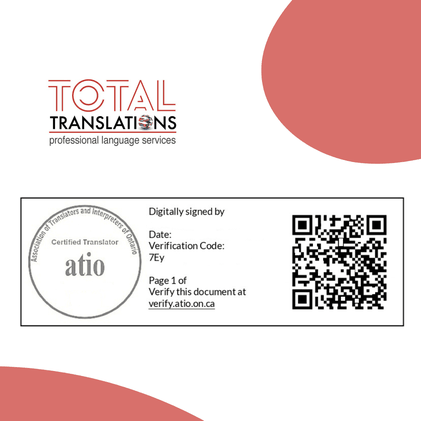
The Association of Translators and Interpreters of Ontario (ATIO) has introduced a modern digital certification system that changes how translators authenticate their work. The system is called the ATIO e-Stamp, and it brings secure digital verification to certified translations through encryption, unique verification codes, and QR codes.
For translators and clients alike, this represents a practical shift away from traditional ink stamps and embossed seals. At Total Translations, we have been closely following this change because it affects how certified translations can be issued, delivered, and verified.
What the ATIO e-Stamp includes
The ATIO e-Stamp is a secure digital certification stamp applied to certified translations. Each document issued through the system contains a set of verification features designed to confirm authenticity. Every page of an e-stamped translation includes a QR code and a unique alphanumeric verification code embedded in a digital footer. This footer is encrypted and traceable through ATIO’s verification system. Because the authentication information is digitally embedded in the document, the translation can be validated even after it has been printed.
How the QR verification works
The verification process is straightforward and can be done in several ways. ATIO allows institutions or clients to confirm a translation’s authenticity through three methods. One option is uploading the original PDF to ATIO’s verification page. Another is entering the alphanumeric verification code associated with the translation. The third method is scanning the QR code located at the bottom of any page in the document.
Security features behind the system
One of the main advantages of the e-Stamp system is its security design. The certification information is encrypted and stored on ATIO’s servers rather than relying solely on a physical mark on paper. This structure helps prevent misuse of stamps, unauthorized duplication of certified translations, and document alterations. Because the verification information is tied to ATIO’s database, any attempt to modify the document would be detectable during verification.
What an e-stamped translation looks like
Certified translations produced with the e-Stamp generally follow a structured format. The document typically includes a cover page containing the translator’s declaration, followed by the translated text and the source document. Each page includes the digital footer with the QR code and verification code.
Does the digital stamp replace the physical one?
Not completely. The traditional ink stamp and embossing seal remain valid and may still be requested in certain situations. However, the digital e-Stamp is now recognized as an official certification mechanism.
In practice, the digital system reduces the need for physical stamps and makes it easier to deliver certified translations electronically.
Printing certified translations at home
One of the most practical benefits for clients is that e-stamped translations can be printed on a standard home printer and still be considered legally valid as the legal authenticity is stored on ATIO’s verification servers, not on the paper itself. The QR code and verification code simply connect the printed page to the secure verification record.
Institutions can scan the QR code or enter the code online to confirm the translation regardless of where or how the document was printed.
A step forward for certified translations
The introduction of the ATIO e-Stamp represents a major modernization for certified translations in Ontario. By combining digital signatures, encrypted verification, and QR code technology, the system makes authentication faster and more secure.
For translation providers like Total Translations, it also means greater flexibility in delivering certified translations faster to our clients while maintaining the professional standards required by ATIO.